
Tapentadol 100mg: What to Know Before Taking It for Severe Pain
When a patient experiences unbearable pain, they may find it difficult to perform even the normal day to day functions, hence requiring an even stronger pain reliever if they cannot control their pain adequately. Tapentadol 100mg is an opioid analgesic prescribed for some kinds of moderate-to-severe pains. It may make you drowsy, dependent on and cause breathing difficulties that can be serious, so it is important to know how it works and its risks prior to treatment.
What Is Tapentadol 100mg?
Tapentadol is a drug belonging to opioids and is a centrally acting analgesic which is available in immediate release and prolonged release types. It is indicated when an opioid treatment is deemed to be appropriate in the management of pain.
Uses of tapentadol 100mg The uses of tapentadol 100mg depend on the form. The use of immediate release tapentadol is for severe acute pain when an opioid is required, while that of prolonged release tapentadol is for chronic severe pain which requires opioid treatment continuously.
Tapentadol is prescribed only on a doctor’s recommendation in the UK. The dosage and/or dosage form is determined by the specific case and response to treatment.
7 Things to Know Before Taking Tapentadol 100mg
Before treatment, these 7 things are important:
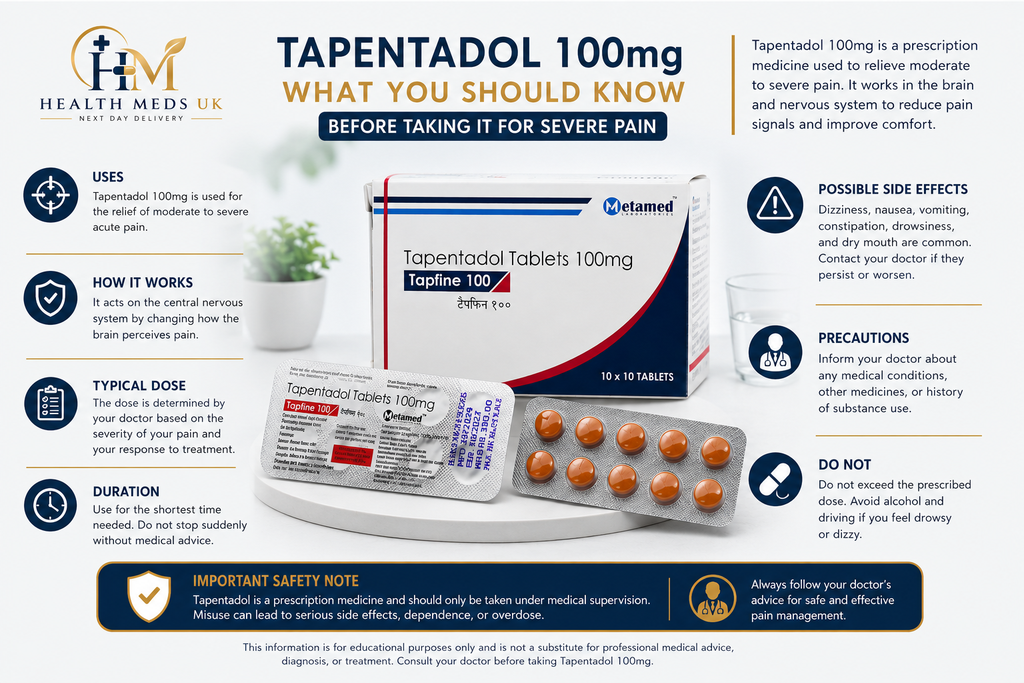
- Tapentadol is an opioid drug: Tapentadol can be very effective at relieving pain, but also has risks that are common to opioid drugs, such as the potential for dependence and tolerance.
- Not for all pain types: Prescribed by a health care professional after considering the cause, severity and duration of pain.
- Strength is important: Do not presume that a 100mg tablet is equivalent for all people. The dose will depend on the individual.
- May cause drowsiness: decreased alertness and dizziness may impair driving, cycling and operating machinery.
- Alcohol can enhance risks: Tapentadol may be used with alcohol and other sedating medications, which may cause central nervous system depression.
- Other drugs affect how tapentadol works: There are some medicines that can interact with tapentadol.
- Withdrawal may occur if they abruptly stop taking tapentadol: Individuals who have been taking tapentadol regularly should talk to their healthcare professional about stopping taking the medication.
What Are the Tapentadol 100mg Uses?
The one of the major tapentadol 100mg uses is for severe acute pain when an opioid analgesic is required.
Not all painful conditions can be cured by medicine. Rather, it decreases the perception and transmission of pain in the nervous system. It should be discussed with the prescriber as to why it is being prescribed and the time period that it will be used.
How Does Tapentadol Work?
Tapentadol has two main mechanisms of action. It binds to opioid receptors in the brain, decreasing the pain’s perception and transmission. It also acts on noradrenaline, thereby enhancing its analgesic activity.
These effects can also happen to the nervous system, making tapentadol make people sleepy, dizzy, and less alert in some people.
What About Dosing and Taking 100mg?
Tapentadol 100mg prescription UK treatment plans should be based on clinical situations individually and not only on the strength. They may take into account the severity and kind of pain, past history of opioid use, age, overall health, liver and kidney function, and other medications.
There are different directions for the dosage of the various formulations. Tablets must be swallowed whole. It is advised that prolonged-release tablets should never be crushed or chewed since it might not release the medication as expected.
Do not increase your dosage or change your timing of taking the dose without the advice of a health professional.
5 Important Safety Risks to Understand
When taking Tapentadol, it is important to be aware of 5 big dangers:
- Breathing difficulties: This might be caused by the opioids, mostly when taken in high dosages or combined with any other sedatives.
- Drowsiness and reduced consciousness: This will make the patients susceptible to accidents.
- Addictive: May become addictive with continued use.
- Tolerance: Body may develop a tolerance to the medicine over time.
- Withdrawal: Quitting regular treatment suddenly may cause withdrawal symptoms.
Good prescribing and monitoring are therefore very important, as these risks are magnified.
Common Side Effects
Side effects are often nausea, vomiting, constipation, dizziness, drowsiness, headache and dry mouth. Others might also find that they become less focused or get blurred vision.
The side effects may be worse at the beginning of the course of therapy or when the dose is changed. Consult your doctor or pharmacist if symptoms continue, are severe or if you are worried.
Medicines and Substances That Can Interact With Tapentadol
Tapentadol has potential drug and substance interaction with those having central nervous system action. Others are other opioid painkillers, benzodiazepines, sleeping pills and other sedatives.
Some medications including antidepressants and serotonin and noradrenaline-affecting drugs should also be taken into account. Opioids will further aggravate drowsiness along with other side effects due to alcohol intake.
Never give your doctor or pharmacist a medicine, supplement or other product that is not current.
Who Should Not Take Tapentadol?
Tapentadol is not recommended for use in individuals who have significant breathing problems or depression of breathing, have some bowel problems or who are allergic to tapentadol or any of its ingredients. There is also a possibility of needing further evaluation in some individuals with liver or kidney disease.
Treatment should be discussed with a healthcare professional before if a woman is pregnant or breastfeeding. Dizziness, sedation and falls may also be more of a danger to older adults.
When Should You Seek Medical Help?
A person taking tapentadol and develops difficulty breathing, breathing slowly or with labored breathing, extreme drowsiness, unable to respond to stimuli, fainting, and loss of consciousness should seek emergency medical care.
Pain not being well-controlled, side effects are causing problems, dependency on or withdrawal from tapentadol should prompt a consultation with a doctor or pharmacist for non-emergency situations.
Conclusion
Tapentadol 100mg for severe pain is a prescription medicine used in opioid class for severe pain when there is a need for a more powerful pain reliever. The effects, dose and risks of use are different for the different formulations and differ from person to person. It is important to know about its uses, interactions and possible side effects before getting treatment. Do not exceed the dose or duration as recommended by your prescriber; always ask your prescriber for advice that is suitable for you.